
Meet Your AV Crew: A Pro's Guide to Core Event Roles
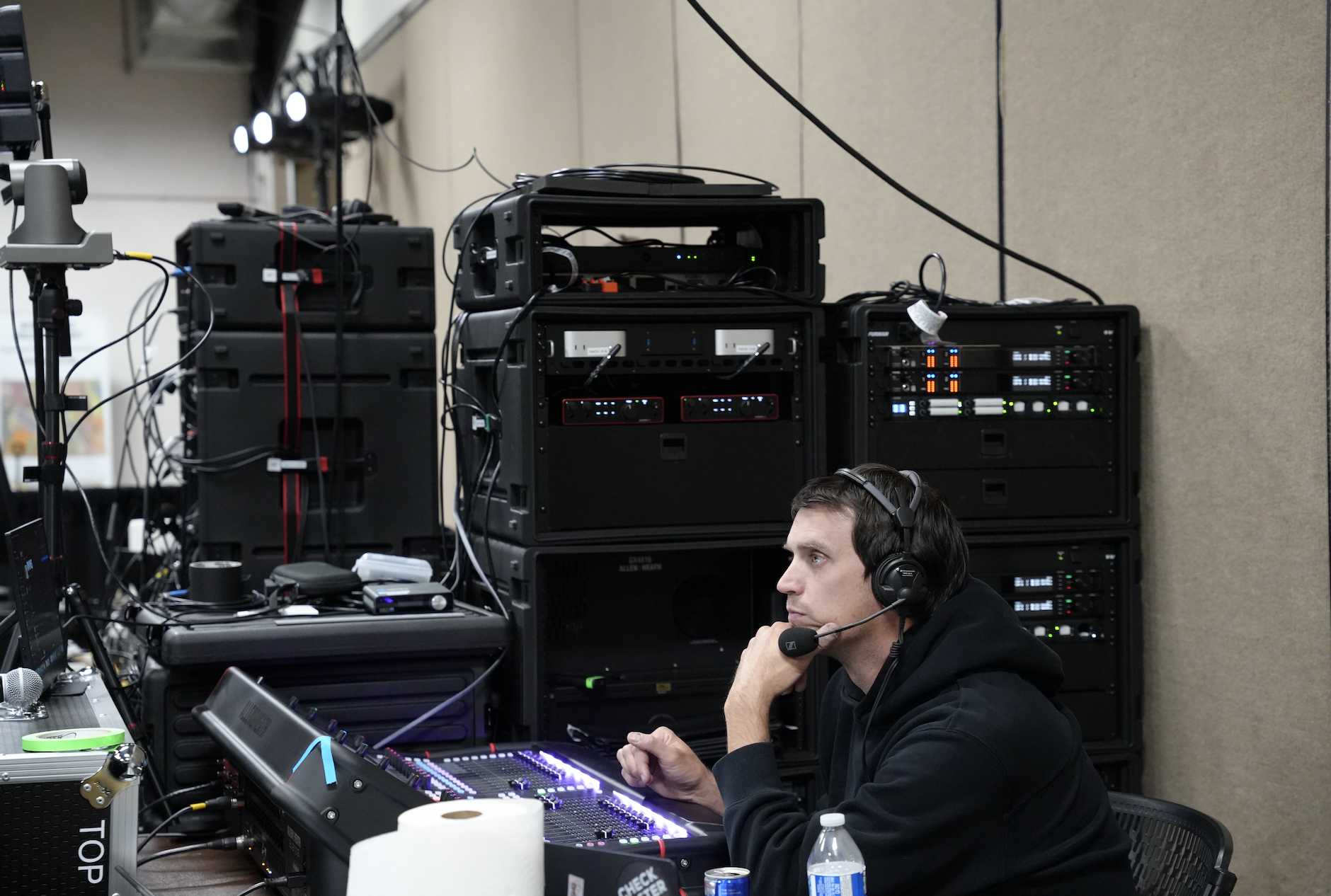
When you hire a professional production company, you're not just getting equipment; you're hiring an expert team. You'll often hear us use acronyms like "TD," "A1," or "V1" when we build your event's run of show.
These roles are the "labor" part of your production budget, and they are the specialists who guarantee your event runs perfectly. But what do they actually do?
Here’s a quick guide to the key players on your event crew.
1. The Showcaller
What They Do: The Showcaller is the "voice in the headset" who directs the live show. They are the single person who "calls" all the cues from the AV show-flow, ensuring the lighting, sound, and video all happen in perfect sync. This person is often a lead producer or director.
On-Site: The Showcaller is laser-focused on the Run of Show, with their headset connecting them to the entire technical crew. You will hear them saying, "Standby CUE 4... CUE 4... GO," prompting the A1, V1, and L1 to all execute their tasks at that exact moment.
Why They're Essential: The Showcaller is the conductor of the orchestra. They are the single point of execution that ensures the show flows smoothly and professionally.
2. The TD (Technical Director)
What They Do: The TD is the technical leader of the crew. They are responsible for making sure all the equipment (the "tech") is designed, built, and working correctly. While the Showcaller directs the show, the TD manages the technical systems and crew that make it possible.
On-Site: The TD is the on-site expert for the entire system. If a signal fails or a complex technical problem arises, the TD is the one who leads the troubleshooting. They are the primary partner for the Showcaller, ensuring the tech is ready for every cue.
Why They're Essential: The TD is the master architect. They are your guarantee that the complex technical vision (like a multi-screen setup or live stream) will actually work reliably on event day.
3. The Stage Manager (SM)
What They Do: If the TD is the "brain" of the tech, the Stage Manager is the "brain" of the stage. They manage all the human elements and logistics on the stage itself.
On-Site: The Stage Manager is usually backstage (or "stage left") with a headset. Their job is to find your next speaker, confirm they are ready, check their microphone, and give them their physical "walk" cue at the exact right moment.
Why They're Essential: The SM is the crucial link between the production crew (the TD/Showcaller) and the talent (the speakers). They prevent chaos backstage and ensure a smooth, on-time flow of presenters.
4. The A1 (Lead Audio Engineer)
What They Do: The "A" stands for Audio, and the "1" means they are the primary audio engineer for the event. They are in charge of everything you hear.
On-Site: The A1 sets up and tests every microphone and is actively mixing the sound live to prevent feedback, ensure consistent volume levels, and make sure every word is crisp and clear.
Why They're Essential: Poor audio can ruin an event faster than anything. The A1 is your defense against feedback, static, and mics cutting out.
5. The V1 (Lead Video Engineer / Tech)
What They Do: The "V" is for Video. The V1 is responsible for everything the audience sees on a screen. This role is often the "switcher," as they "switch" between different video sources.
On-Site: The V1 builds and manages the video system, including projectors, screens, and confidence monitors. During the show, they are at the control station, switching between live cameras, presentation slides (like PowerPoint), and pre-produced video clips.
Why They're Essential: The V1 ensures the right content is on the right screen at the right time. They are the ones who make sure the transitions are clean and professional.
6. The L1 (Lead Lighting Designer / Operator)
What They Do: The "L" is for Lighting. The L1 is the specialist who designs and controls the entire event lighting system.
On-Site: The L1 sets up all the lights, from a simple stage wash to complex moving lights. During the show, they operate the lighting cues, such as dimming for a video or spotlighting a speaker.
Why They're Essential: The L1 creates the mood, directs the audience's focus, and ensures presenters on stage (and on camera) look great.
7. The Camera Operator (CamOp)
What They Do: This is a highly skilled specialist whose sole job is to capture the action on stage. This is not a "set it and forget it" role—they are actively framing shots, tracking speakers, and adjusting focus and exposure in real-time.
On-Site: You will see them positioned (often on a riser) behind the audience, or on the side of the stage. They are in constant communication with the TD and Showcaller.
Why They're Essential: A skilled Camera Operator is the difference between a flat, boring "webcam" shot and a dynamic, broadcast-quality production. Note: This role is separate from a V2, unless the cameras are robotic (robo-cams) and being controlled by the video techs.
8. The "Assist" Roles (A2, V2, etc.)
Think of the "1s" as the Executive Chefs who stay at their control station. The "2s" are the "Sous Chefs"—the skilled hands on the floor.
A2 (Audio Assist): The A1 stays at the mixer. The A2 is testing mics and micing up your 10-person panel before they walk on stage. They also manage the handheld mics for audience Q&A.
V2 (Video Assist): This tech supports the V1. They might be responsible for managing all the presentation decks on a separate laptop (a "Playback Op") or running cables, but they are generally not operating the main camera.
8. The PA (Production Assistant)
What They Do: The PA (or "runner") is an all-purpose support role. They are the "utility players" who assist the entire crew.
On-Site: A PA's job can be anything and everything: making coffee, printing updated scripts, finding a speaker who is late, setting out water on the lectern, or helping the A2 run a cable.
Why They're Essential: PAs are the glue that holds the event together. They handle the small but critical tasks that keep the specialized techs focused on their primary, high-skill jobs.
Final Thoughts
These specialized roles are why professional event production is so valuable. When you hire a team like Plato Media Co., you're not just getting "AV guys." You're hiring a coordinated team of specialists—from the TD and A1 to the Stage Manager—who all work in sync to make your event a success.
Ready to build your event's A-team? Contact us today.
