
Lectern vs. Podium: A Pro's Guide for Event Planners
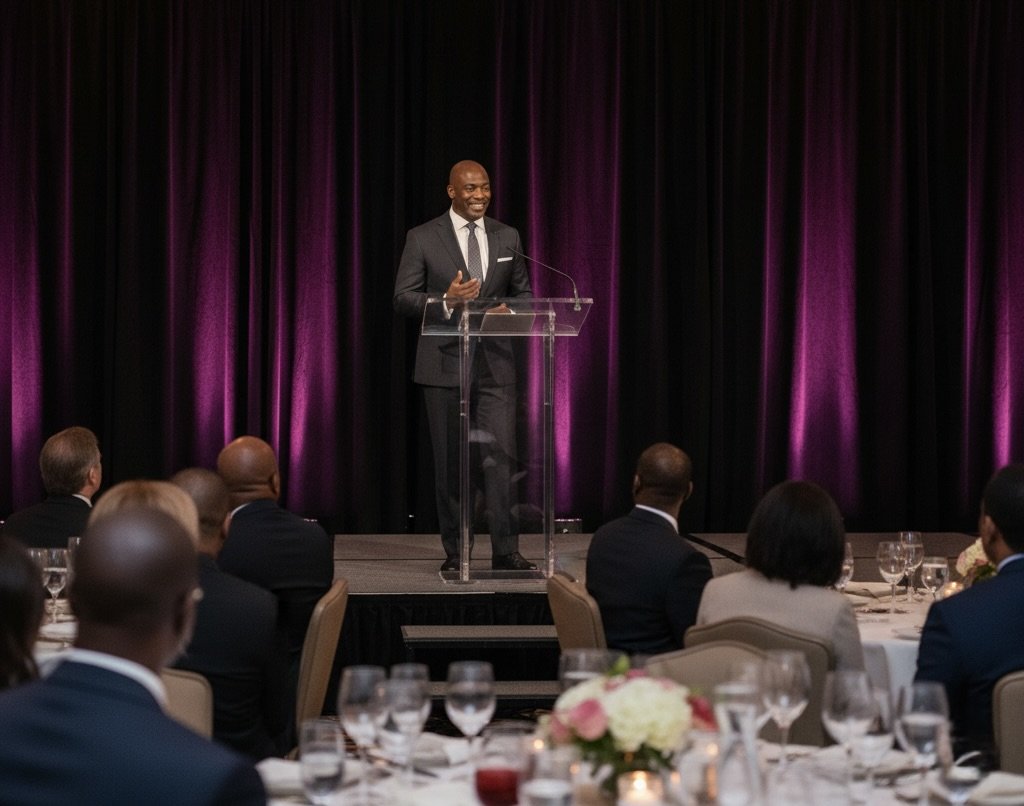
In the event production world, the terms "lectern" and "podium" are often used interchangeably, but they refer to two very different pieces of stage equipment. Knowing the difference is key to clear communication and ensuring your stage is set up exactly as you envision.
Here’s the simple breakdown:
Lectern: A stand with a slanted surface that holds a speaker's notes or laptop. You stand behind a lectern.
Podium: A raised platform that the speaker stands on to be seen by the audience.
In short, you stand on a podium and behind a lectern. Often, a lectern is placed on a podium, but they are not the same thing.
While both are important, the lectern is a critical piece of tech and furniture that directly impacts your speaker's comfort and the technical setup.
Why a Lectern is a Key Technical Component
A lectern serves as the speaker's "home base" on stage. It provides a surface for notes, a place to rest their hands, and, most importantly, a mounting point for microphones. It's a key piece of equipment for:
Conferences and seminars
Award ceremonies
Product launches
Press conferences
The type of lectern chosen has a direct impact on the AV setup, from lighting to microphones.
Common Lectern Types and Their AV Considerations
Selecting a lectern isn't just an aesthetic choice; it's a technical one. Here are the common types and what our production team considers for each.
1. Plexiglass / Acrylic Lecterns
Appearance: Sleek, transparent, and modern.
Best For: Corporate events, tech conferences, and minimalist stage designs.
AV Consideration: These look great but require a specific AV approach. We have to be mindful of lighting to prevent glare and use special, slender microphones with discreet mounts to maintain the clean look.
2. Wooden Lecterns
Appearance: Classic, traditional, and substantial. They convey a sense of authority.
Best For: Academic conferences, formal ceremonies, and government or legal events.
AV Consideration: These are often the easiest for AV. They are solid, hide cables perfectly, and can be easily and securely fitted with "flange" mounts for gooseneck microphones, providing a reliable and clean setup. They may be heavy to carry.
3. Metal (Truss) Lecterns
Appearance: Industrial, modern, and high-tech.
Best For: Large-scale events, product launches, and tech-focused presentations.
AV Consideration: The truss structure is perfect for hiding cables, though may be heavy to carry.
4. Portable / Folding Lecterns
Appearance: Functional and minimalist, designed for transport.
Best For: Small-scale events, breakout rooms, or venues with limited setup time.
AV Consideration: While practical for simple needs, they offer less stability and almost no space to hide wiring, making a "clean" look more challenging. They are best suited for functionality over form.
Final Thoughts
Understanding the difference between a lectern and a podium is the first step. The next is recognizing that a lectern isn't just furniture—it's a key technical component of your stage.
At Plato Media Co., we help you select the right lectern that fits your event's aesthetic and functions perfectly with the technical production. Contact us today to talk about the setup for your next event.
