
General Session vs. Breakout Session: A Pro's Guide
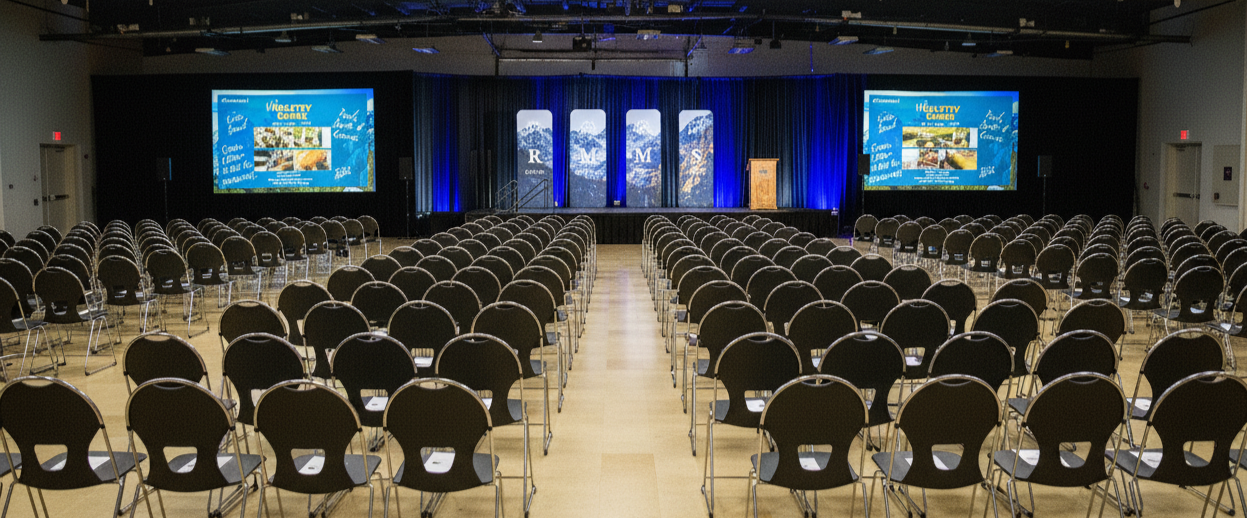
When designing a conference or multi-part event, understanding the role of each session is critical. The two most common types, general sessions and breakout sessions, serve very different purposes. Knowing how to use them correctly is key to building a program that is both engaging and effective.
Here’s a breakdown of what makes these sessions distinct and the key production considerations for each.
1. General Sessions (The Main Stage)
Also known as a "plenary," this is the "one-to-many" anchor of your event. It’s where all attendees gather in one central location to share a single, unified experience.
Key Characteristics:
Unified Focus: Sets the tone for the event. Used for content that all attendees must hear.
High Production Value: This is the "main stage" and should look like it.
Prominent Speakers: Typically features keynote speakers, CEO addresses, or high-profile industry leaders.
Common Formats:
Opening and closing remarks
Keynote presentations
Major product launches or announcements
Award ceremonies
AV & Production Considerations
This is where production value is most visible. A general session's technical setup often involves pro-level event lighting to create the mood, a robust sound system for the large space, and presenter support like confidence monitors to help speakers stay on track.
2. Breakout Sessions (Focused Engagement)
Breakout sessions are the "many-to-few" component. They are smaller, concurrent sessions in separate rooms that allow attendees to "choose their own adventure."
Key Characteristics:
Specialized Content: Allows attendees to dive deep into niche topics relevant to them.
Interactive: The smaller scale is designed to foster audience participation, Q&A, and workshops.
Smaller Scale: The intimate setting encourages better interaction and networking.
Common Formats:
Hands-on workshops
Industry-specific panels
Roundtable discussions
Technical deep dives or product demos
AV & Production Considerations: The Breakout Challenge
Breakouts present a unique logistical challenge: you have multiple rooms running at the same time, often with a shared on-site technical support team. This is where reliability and simplicity are key.
The Right Gear: The goal is a clean, reliable, and easy-to-manage setup. A large, complex mixer isn't practical. This is why we often use compact, professional mixers (like the Zedi-10) that provide high-quality audio without unnecessary complexity.
Support Plan: A "floating" technician needs to be able to move between rooms quickly. This must be outlined in the event's run-of-show so the team knows where to be and when.
How General & Breakout Sessions Work Together
General sessions provide the "wow" factor and shared experience, while breakout sessions provide the targeted, personal value. A successful event balances both.

Final Thoughts
Understanding the difference between general and breakout sessions allows you to design an event that delivers on all fronts: a high-energy shared experience and personalized, valuable content.
At Plato Media Co., we have the equipment and expertise to manage both high-production general sessions and the complex logistics of multi-room breakouts. Contact us to discuss the plan for your next event.
