
A Speaker's Guide to Event Mics: Headset, Lavalier, or Hand-held?
In our guide on what to wear on stage, we covered how your outfit choices affect the production. The single biggest reason for those recommendations is the microphone.
Most professional events use one of three types of microphones. As your production partner, we choose the right tool for the job. Here’s a quick guide to the mics you’ll be outfitted with, what they're for, and how they work.
1. The Lavalier ("Lav") Microphone
This is the most common microphone for a corporate keynote or panel.
What It Is: A small, discreet mic that clips onto a collar, lapel, or the edge of a shirt, placed in the center of the chest, under the mouth.
How It Works: The mic connects to a wire that runs inside your shirt to a transmitter belt-pack (about the size of a deck of cards). This is why we recommend wearing an outfit with a sturdy waistband, belt, or pocket to securely clip the pack.
Best For: Polished, professional presentations where the speaker isn't moving excessively.
2. The Headset Microphone
This is the standard for high-energy presenters, trainers, and product demos.
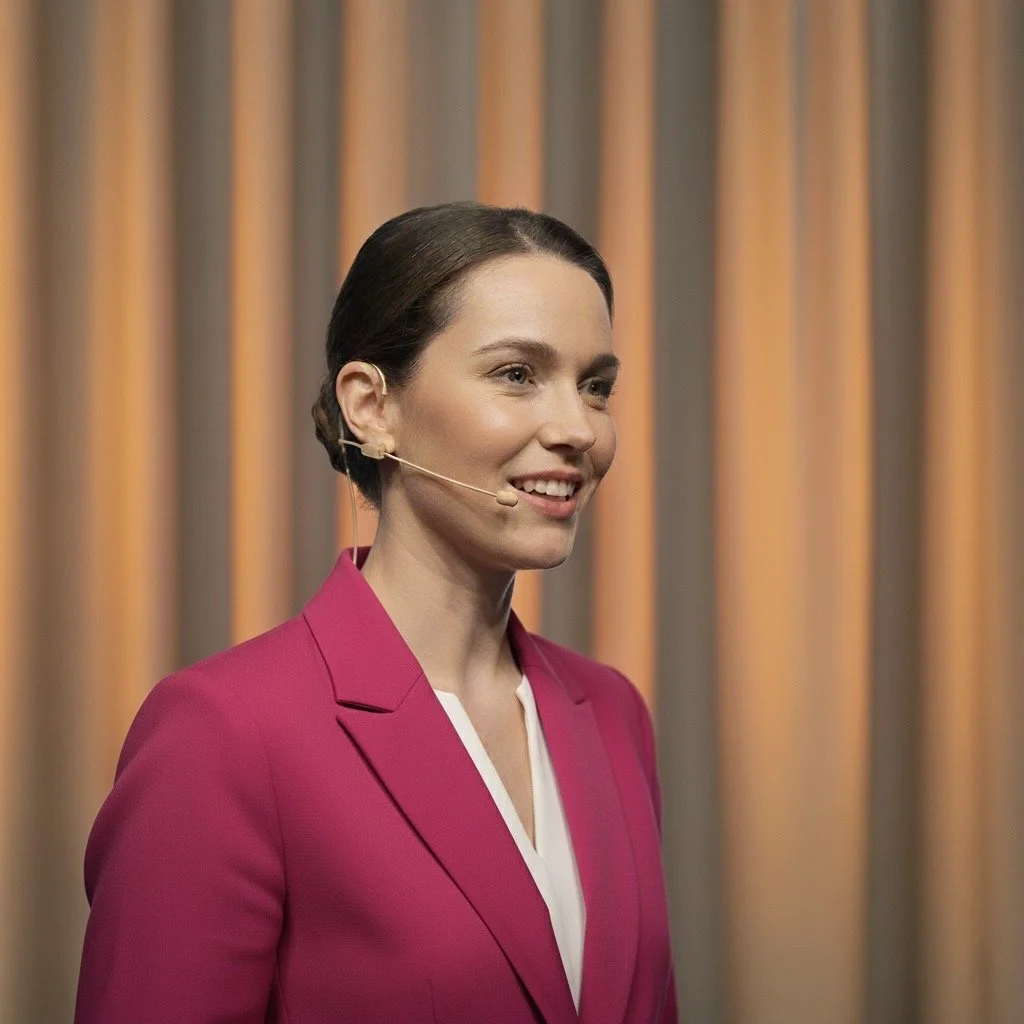
What It Is: A thin wire that hoops around one ear, with a small microphone that extends along the cheek, close to the mouth.
How It Works: Like the lavalier, this mic connects to a transmitter belt-pack.
Best For:
High-Energy Speakers: If you plan to walk the stage (think "TED Talk" style), a headset is superior.
Consistency: The mic is always a perfect distance from your mouth, so the audio is crystal clear, even if you turn your head.
Hands-On Demos: Ideal for when you need to turn away from the audience to point at a screen or product.
3. The Hand-held Microphone
This is the classic, versatile option, most often used for audience participation.
What It Is: A wireless, hand-held microphone.
How It Works: You must actively hold it. The best technique is to hold it near your mouth as if you're eating an ice cream cone. (Don't let it drift down to your chest!)
Best For:
Audience Q&A: It's easy to pass around.
Emcees & Hosts: A host uses it to make quick announcements.
Performers: Singers or comedians who use the mic as part of their act.
A Note on Professional Gear (Please Read)
We use high-end, professional-grade wireless microphones. They are expensive, sensitive pieces of equipment.
Please Note: DO NOT MIC DROP (even accidentally). These are sensitive instruments, and a replacement can cost you upwards of $3,000.
Final Thoughts
You don't need to be a microphone expert—that's our job. As part of our speaker communication process, we'll work with you to select the mic that best fits your presentation style and comfort level.
Our goal is to make the technology feel invisible so you can focus on delivering your message.
